



“We are built upon protesting.”
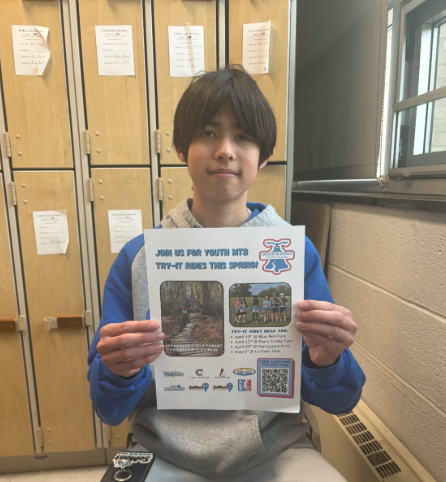
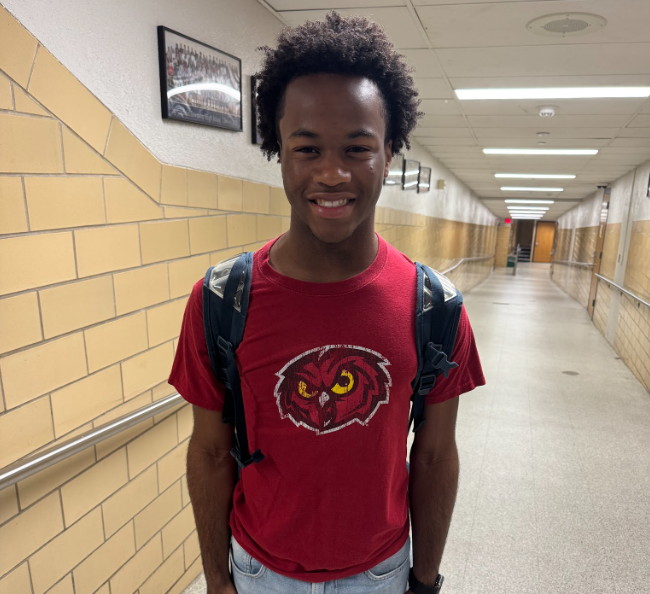
This is how sophomore Sam Sonta defines the foundation of the United States of America. Protests have been a fundamental part of American culture since before the U.S. gained independence and have since continued to exist nation-wide and within smaller communities for varying pressing causes. Most recently, some Americans have held protests in opposition to the actions of the U.S. Immigration and Customs Enforcement agency, also known as ICE.
While thousands of adults have marched across streets to express their anger toward ICE, what makes this cause so unique is that high school students across the country are also speaking out…or walking out… of their schools.
Spartan’s Beliefs on Protests
The qualities they see best fit
Across the nation, protests denouncing ICE for their mass deportations have taken storm and flooded the news.
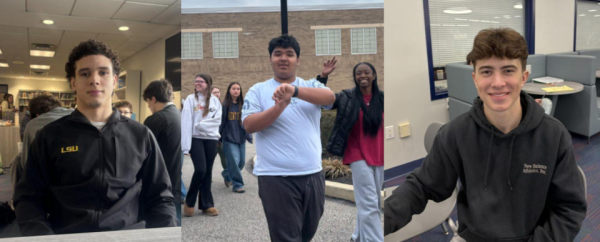
“Violent” is the word senior Stella Miller chooses to characterize the majority of the nation’s protests, with senior Jordan Bebee adding that he has seen “a lot of outrage.” However, Sophia Perez, a sophomore, notes that protests “often start off decently peaceful and… [rank] up as authorities show up.”
But, the question is, given varying types of protests, what protest qualities do Springfield students see best fit to make any type of change?
Many students can agree that they want peaceful protests to be the leading fight for reform. Bebee clearly states that he believes, “peaceful protests are the most effective.” In order to, “convince the public,” of change, Perez understands, “peaceful,” protests to be the most crucial.
The state of Minnesota has been at the height of the news for their numerous protests criticizing ICE. With disruption throughout public areas and tragic losses of life, the protests have become highly divisive across the country. However, their more ‘peaceful’ protests have also gained attention as recently thousands of people have joined in the streets to sing songs of resistance.
In accordance with instances of more peaceful protests, Bebee thinks, “it’s just a good showing of your point and it’s a good way to get it across.” He says that “just being vocal about your opinion” is the best form of activism.
And while thousands have been attending protests in Minnesota and across the country, Gael Vega, junior, emphasizes that, “it’s never about the number. It’s always about the stuff that they’re saying in these protests.
Crossing the Line: Necessary?
Although a peaceful protest is the imagined utopia for most students, when does ‘crossing the line’ become more effective in the eyes of Springfield students?
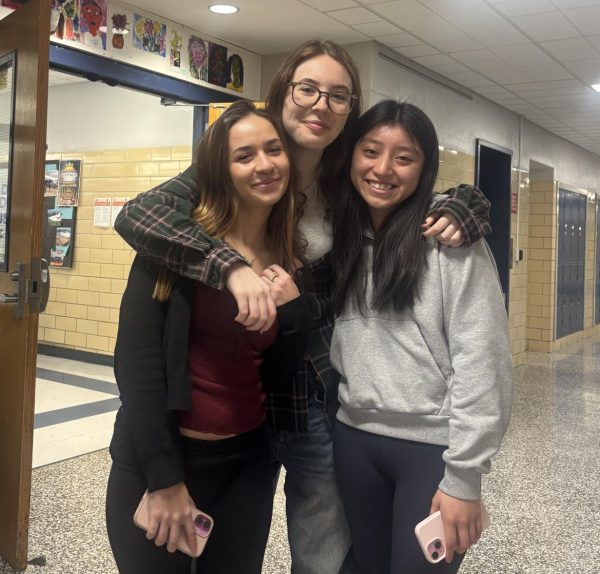
To first answer the question, students have to have their own definition of ‘crossing the line.’ While seniors Miller and Paula Daubon define it as, “anything that’s not peaceful, like hurting others,” or, “causing destruction,” others, such as freshman Oliver Carlson, understand it to be more difficult to define; “It depends.”
Though not easy to determine, overall, students believe violence is a part of ‘crossing the line’ in protests, and some think it to be necessary. In the case of “convincing the government” of a cause, Perez believes protests might need to be “more serious and violent.”
Vega understands another reason protests might rightfully become violent is “if authorities start harassing people and harming them.”
In other recent Minnesota protests, upheaval has been a characterizing feature. As Springfield students struggle to agree on what defines ‘crossing the line’, people across the nation are posing similar questions in Minnesota.
Despite what type of protest is most ideal, junior Gus May notes that, “the more violence in a protest, the more publicity it gets,” understanding the power violence has, even if students may not be a proponent of it. He adds that, “while nobody should push for violence, I think unfortunately violence ends up bringing about more change than peaceful stuff can.”
Importance of Protest
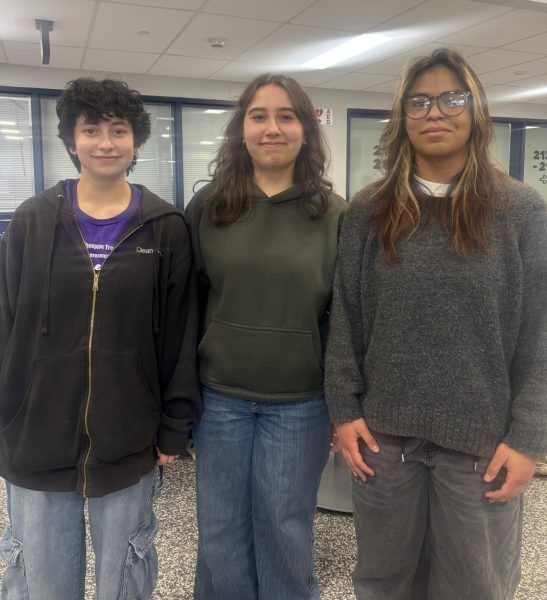
Regardless of students differing beliefs in how a protest should be conducted, the importance of protesting is something Springfield students feel passionately about.
Miller doesn’t believe that everybody has, “an obligation,” to protest; however, she thinks, “it’s definitely something that you should do and can do.”
Adding on, Bebee argues that, “the impact that [protests] can bring is a lot greater than the harm.”
Looking back at the history of the United States, Sonta acknowledges that, “we wouldn’t have America without all these different forms of protest.” Freshman Kory Rodriguez agrees, saying, “It was put in the Constitution for a reason.”
Protest in action: the walkout
Springfield’s walkout didn’t just appear out of thin air. Here, Chronicle writers mapped every phase surrounding the ICE-out walk–from before it was organized, to during the walk, and reflections afterward.
Before the Springfield walkout was confirmed
Before Spartans decided to join the walkout movement themselves, they were staying updated on local and national protest. In terms of where they get their information, Carlson gives the main source: “Social media.”
Bebee echoes this, saying that a lot of protest talk is something he has “picked up on.” That is still to say that a large portion of students, like Daubon, have followed it avidly—especially “on [her] feed.”
But, in the context of so much national media coverage, what are students’ thoughts on an ICE-specific walkout at Springfield?
For many, like Miller, a school walkout is “good to raise awareness.” She predicted that if our school walked out, “more people would be aware” about the ways national ICE discussions impact our community.
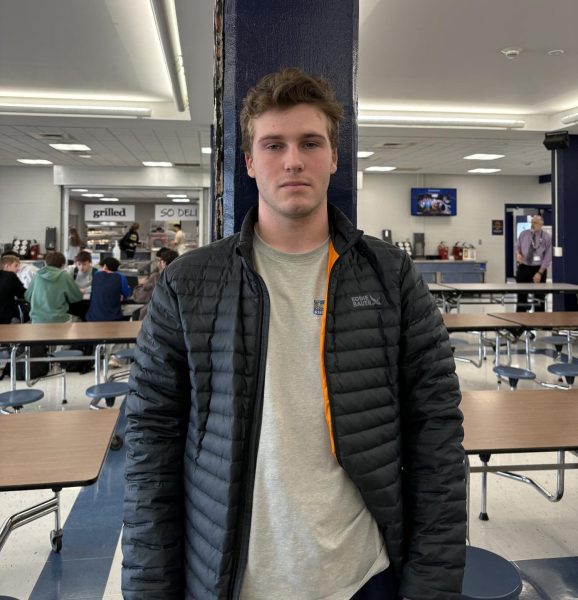
Gus May expands on Miller’s thoughts: “I don’t think the opinions would change, I just think people would talk about them more.” But, in terms of effectiveness, he asks a question that leans in a different direction than Miller’s; “How seriously is it gonna be taken by [government officials] making decisions?”
Bebee also doubts that students’ protests are received with open ears. He explains, “being that legislators aren’t getting a vote from them, they’re not very likely to take their opinion into account.”
In the face of such an intimidatingly national issue, Bebee’s and May’s thoughts are common. But Perez provides a counter point: “Even though the youth can’t vote or be involved with politics, [they] should show [others] that they do care and it does affect them.”
And that’s why Spartans walked out on March 19th.
During the walk
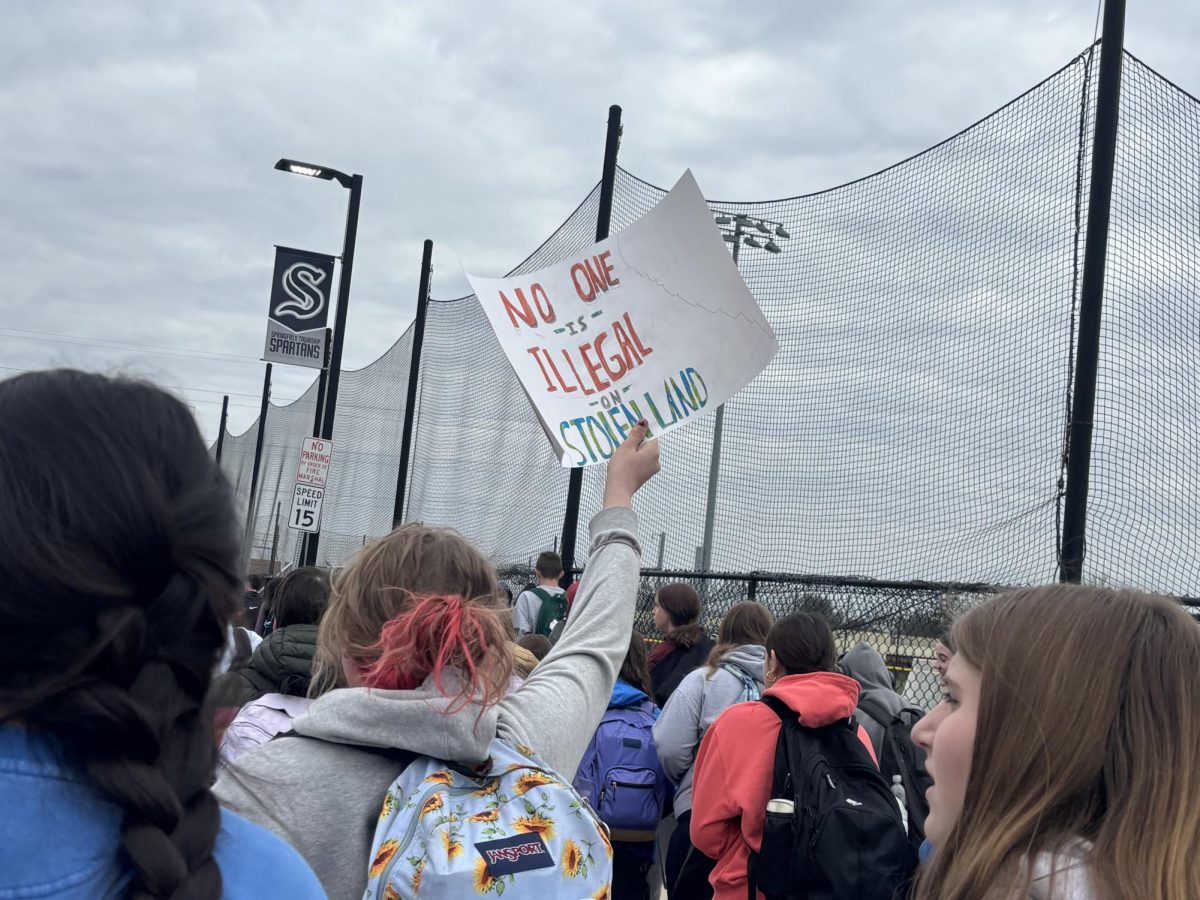
During lunch and learn, students across grades walked out of Springfield Township High School with signs and music. Chronicle writers gathered their thoughts as they lapped the campus.
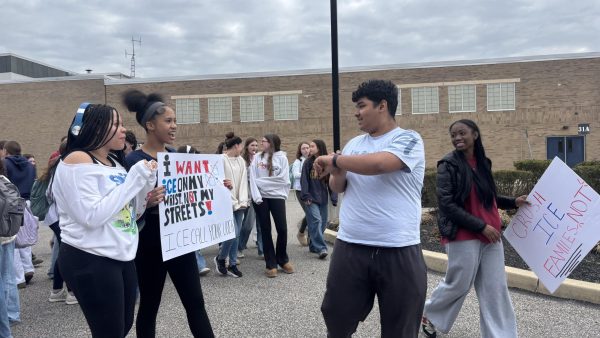
Gael Vega is and was a large proponent of the walkout. He speaks to the spirit of the protest: “We’re expressing our right to freedom of speech. We are giving a voice to those that don’t have one in our country, [and] in our community. We’re giving awareness that the stuff that is happening right now isn’t right.”
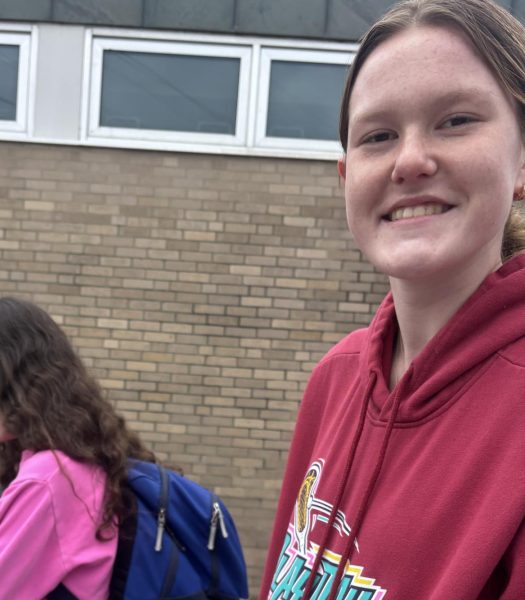
Protesters’ messages varied, but held a unified theme against ICE’s recent actions. Freshman Maddie Wilson comments “we shouldn’t be sending people away when we’re supposed to be the country of new beginnings.” Others walked because, as freshman Rain Barth puts it, they don’t want “to worry about not seeing [their] friends or family again.”
Many students spoke on behalf of the struggle of their family. Amelia Arkles, a sophomore, shared, “My family escaped Vietnam during the Vietnam war, coming to America for safety and freedom… They fought to finally, legally, arrive in a land that claimed to be free, accepting, and diverse. I’m disgusted with the violence and discrimination ICE has flooded our country with, and I’m walking because I’m not willing watch my family’s efforts go to waste.”
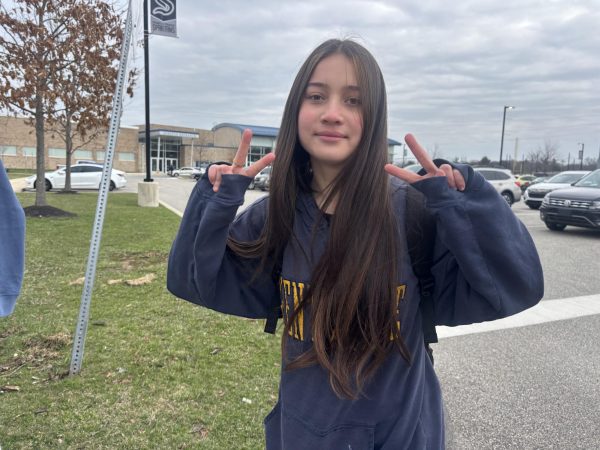
Some, like senior Grace Bell, see the issue from a political perspective. Bell says, “what we have in this administration is not right”—and that she walked to “stand up against it.” Her thoughts were bolstered by students’ “ICE out” chants throughout the event.
In all, Gael Vega sums up what walkers were feeling, “It honestly hurts to see all this happening. Especially in such a country where it’s literally called ‘the land of the free.’” He says, if he were to relay a message, it would be to “just stop the violence and try not to split up families… [or] harass people because of their skin color.”
Students’ reflections
After a strong showing, Vega discusses his gratitude, saying, “It makes me feel proud of our district.” He elaborates, “We might be a small district, but we did get out the message and we had people supporting us, both inside and outside.”
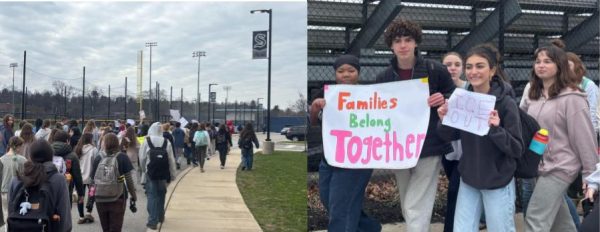
As for the supporters outside, it took a lot of courage to publicly display their beliefs. Sophomore Abby Hay explains what helped her feel comfortable taking the step, by “doing it with some of [her] friends.” More than this, going in a group made her feel like the turnout was “more effective.”
Timmy Barry, a senior and supporter from the inside of the school, gives the perspective of someone who decided to stay on the sidelines: “I think it’s important to, but I [didn’t] because that’s not my thing.”
Final thoughts
Local or national, “peaceful” or “divisive,” populated or not, protest has many different identities. But at Springfield, on March 19th, protesters were united and energetic.
In the context of rampant national debate, Spartans showed “[they] care… even though [they’re] younger” and “[made] their voices heard,” as said by Abby Hay and Paula Daubon. More than this, they marched with empathy, and with a message that begs to be heard:
“Stop the violence.” (Gael Vega)